Festive Facts to Test Your Holiday Knowledge
Written 6th July 2026 | Subscribe to our Christmas newsletter
Think you're a Christmas expert? From festive traditions and classic films to Christmas songs, food and history, these Christmas trivia questions will put your knowledge to the test.
Whether you're planning a Christmas quiz, entertaining the family over dinner, hosting a festive party or simply looking for some fun holiday facts, these Christmas trivia questions are perfect for children and adults alike.
Try to answer each question before revealing the answer. Good luck!
Answer: 🍊 Orange
An orange was once considered a luxury gift and symbolised generosity and good fortune at Christmas.
Before chocolate became affordable, receiving an orange at Christmas was considered a real luxury. During the Victorian era, fresh citrus fruits were expensive in Britain because they had to be imported from warmer countries. Placing an orange in the toe of a stocking became a symbol of generosity and is thought to have been inspired by the legend of Saint Nicholas secretly giving gold to a poor family
Answer: 🍎 Apples
Before glass ornaments became popular, decorated apples were often used to adorn Christmas trees.
Long before shiny baubles decorated Christmas trees, apples were one of the most popular ornaments. They represented the forbidden fruit from the Garden of Eden and featured in medieval "Paradise Plays", which were performed around Christmas. Eventually, glassmakers in Germany created colourful baubles to replace them.
Answer: 🇩🇪 Germany (although historians debate whether it truly originated there).
The Christmas Pickle is said to be hidden deep inside the Christmas tree, with the first child to find it receiving an extra gift or good luck for the coming year. Although it's widely marketed as a German tradition, many historians believe it actually became popular in the United States during the late 1800s.
Answer: 🐦 Robin
The robin became a Christmas icon during the Victorian era. Postmen delivering Christmas cards wore bright red uniforms and were affectionately nicknamed "Robins." Artists soon began drawing robins on festive cards, and before long the bird became one of the best-known symbols of Christmas.

Answer: 🎵 Jingle Bells
Although it's one of the world's most recognisable Christmas songs, Jingle Bells was originally written in 1857 for a Thanksgiving celebration. Originally titled The One Horse Open Sleigh, it didn't mention Christmas at all but became associated with the holiday because of its snowy winter setting.
Answer: 🦌 Dasher
Rudolph didn't appear until 1939. In the famous poem A Visit from St. Nicholas (better known as 'Twas the Night Before Christmas), Dasher is the very first reindeer named, leading the team long before Rudolph's glowing nose became part of Christmas folklore.
Answer: 👑 Queen Victoria and Prince Albert
Christmas trees were already known in Britain, but they became hugely fashionable after an illustration of Queen Victoria, Prince Albert and their children gathered around a decorated tree was published in 1848. Families across the country soon copied the royal tradition.
Answer: 🍇 Dried fruits and dark sugar or treacle
The rich colour of Christmas pudding comes mainly from raisins, currants, sultanas and dark brown sugar or black treacle. Many recipes also include stout, ale or brandy, which deepen both the colour and flavour.
Answer: 🪙 A silver sixpence
For generations, families stirred a silver sixpence into their Christmas pudding before baking it. Whoever discovered the coin while eating was believed to enjoy good luck and prosperity throughout the coming year..
.webp)
Answer: 🇳🇴 Norway
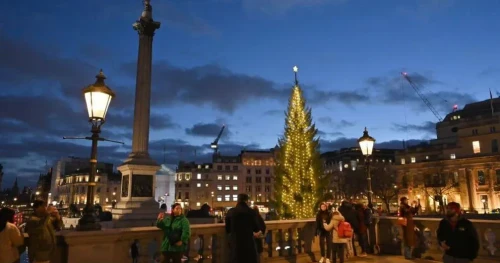
Every year since 1947, Norway has donated a magnificent Christmas tree to London in gratitude for Britain's support during World War II. It has become one of London's most recognisable Christmas traditions.
Answer: ✨ Tinsel
The first tinsel was produced in Germany using incredibly thin strips of real silver. Although beautiful, it tarnished over time, leading manufacturers to develop cheaper alternatives made from aluminium and plastic.

Answer: 🪶 Dyed goose feathers
Concerned about deforestation, German families began making artificial Christmas trees from goose feathers dyed green during the 19th century. These feather trees are now prized collectors' items.
Answer: 🐑 To resemble a shepherd's crook.
One popular explanation is that the curved shape represents the shepherd's crook, reminding Christians of the shepherds who visited baby Jesus. While the exact origin isn't certain, this symbolism has become widely accepted.
Answer: 🎬 Miracle on 34th Street (1994 remake)
In the 1994 remake, Cole's Department Store replaced Macy's due to licensing arrangements. Despite the change, the film remains one of the most beloved Christmas classics.
Answer: 🇳🇱 The Netherlands
Children in the Netherlands celebrate Sinterklaas on 5 and 6 December, leaving out their shoes for gifts and treats. The celebration predates many modern Christmas traditions and influenced the development of Santa Claus.
Answer: 🔥 The Yule Log
The Yule Log was traditionally a large piece of wood burned during the Christmas season. In some traditions, part of the log was kept to light the next year’s fire, symbolising protection, good luck and continuity from one Christmas to the next.
Before Christmas crackers contained plastic toys, what useful household item was often found inside?
Answer: Small practical gifts, such as thimbles, combs or miniature tools
Early Christmas crackers often contained useful little items rather than throwaway toys. They were originally inspired by wrapped sweets and later became popular with the addition of a snap, a joke, a paper crown and a small gift.
Answer: Holly
Holly has been used in winter celebrations for centuries. Its sharp leaves and bright berries made it a symbol of protection, life and resilience during the coldest months of the year.
Answer: Green
Before the red-suited image became standard, Father Christmas was often shown wearing green robes, especially in older British illustrations. The green version represented winter greenery, feasting and festive cheer.

Answer: Jingle Bells
On 16 December 1965, NASA astronauts Wally Schirra and Tom Stafford aboard Gemini 6A surprised Mission Control by pretending they'd spotted a mysterious flying object travelling across space. Moments later, they pulled out a tiny harmonica and a set of sleigh bells they had secretly brought onboard and played "Jingle Bells", making it the first song ever performed in space. The harmonica and bells are now preserved in the Smithsonian National Air and Space Museum.
What festive drink gets its name from an old English phrase meaning “be healthy”?
Answer: Wassail
Wassail comes from an old greeting meaning “be well” or “be healthy.” The drink was often made with hot spiced ale, cider or wine and was linked with singing, visiting neighbours and festive celebrations.
Which royal family helped make exchanging Christmas cards fashionable in Britain?
Answer: Queen Victoria and Prince Albert’s family
Christmas cards became increasingly popular in Victorian Britain. The royal family’s enthusiasm for festive traditions helped make Christmas cards, decorated trees and family celebrations more fashionable.
Which small bird appeared on many Victorian Christmas cards before robins became more popular?
Answer: Wren
Wrens appeared on some Victorian Christmas cards and were linked with older winter traditions. Over time, the robin became the stronger Christmas symbol, partly because of its red breast and connection with Victorian postmen.
Answer: Norway
Trafalgar Square receives a Christmas tree from Norway every year. The gift is a thank-you for Britain’s support during World War II and has become one of London’s best-known festive traditions.

.webp)